 Reviews


How to Unclog a Drain?
Dealing with a slow drain is one of the most frustrating household problems. Water backing up in your sink, shower, or bathtub is a clear sign that something is blocking the flow. Most homeowners can fix this problem without calling a plumber and without spending a lot of money. This guide covers everything you need to know about drain cleaning, from simple DIY methods to knowing when professional help is the right call.
What Causes a Clogged Drain?
Understanding the cause helps you choose the right fix.
Kitchen drains get blocked mainly by grease, food scraps, and soap buildup. Over time, these materials stick to the inside of the pipe and slow the water flow.
Bathroom drains clog most often because of hair, soap scum, and toothpaste residue. Hair is the number one cause of a slow shower drain or bathtub drain backup.
Other common causes include:
- Mineral buildup from hard water
- Small objects accidentally dropped into the drain
- Tree root intrusion in main sewer lines
- Old or corroded pipes with rough inner walls that catch debris
Identifying what type of clog you have makes the repair faster and more effective.
Signs You Have a Clogged Drain
Catching a blockage early saves you time and money.
Watch for these warning signs:
- Water draining slowly in the sink, shower, or tub
- Gurgling sounds coming from the drain after water runs
- Standing water that does not drain within a few minutes
- A bad smell coming from the drain
- Water backing up in another fixture when you flush the toilet
If you notice any of these signs, act quickly. A small clog is much easier to clear than a full blockage.
How to Unclog a Drain: 5 Proven Methods
Method 1: Use Boiling Water
Starting with the simplest solution is always a good idea.
Boil a full kettle of water and pour it slowly down the drain in two or three stages. Wait about 30 seconds between each pour. Boiling water melts grease and soap buildup and can clear a minor clog in minutes.
This works best on: kitchen sink clogs caused by grease or soap.
Do not use this method on: PVC pipes, since extremely hot water can soften or damage them. Use very hot tap water instead.
Method 2: Baking Soda and Vinegar
Using a natural drain cleaner is safe, affordable, and effective for many common clogs.
Pour half a cup of baking soda directly into the drain. Follow it with half a cup of white vinegar. Cover the drain with a cloth or drain cap to keep the reaction inside the pipe. Wait 15 to 20 minutes, then flush with hot water.
The chemical reaction between baking soda and vinegar breaks down organic material like hair, soap, and grease. This is one of the most popular home remedies for a slow-draining sink.
Best for: bathroom sinks, shower drains, and light kitchen clogs.
Method 3: Use a Plunger
With the right technique, a plunger clears most sink and toilet clogs quickly.
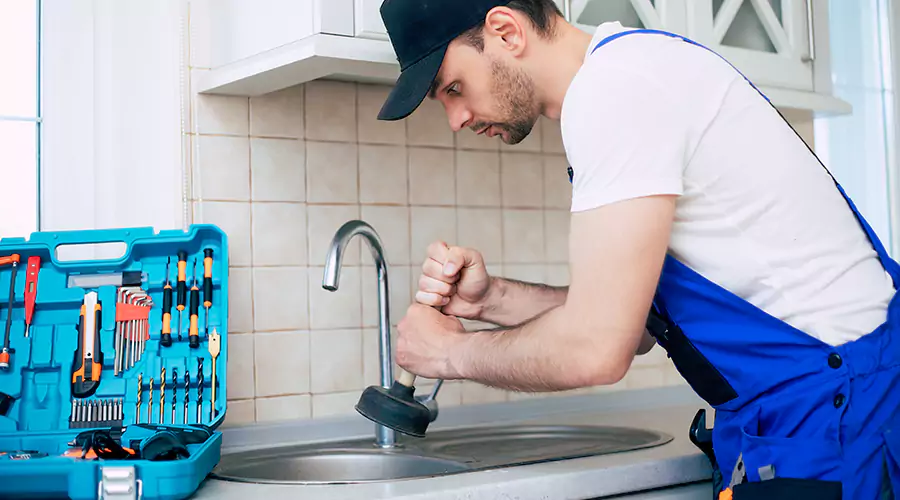
Place the plunger cup firmly over the drain opening. Make sure there is enough water in the sink or tub to cover the cup. Push down and pull up in a steady rhythm for about 20 to 30 seconds. Lift the plunger and check if the water drains freely.
For a double sink, block the second drain with a wet cloth before plunging. This keeps the pressure focused on the clog.
Best for: kitchen sinks, bathroom sinks, bathtub drains, and toilet clogs.
Method 4: Use a Drain Snake
At times, a clog is too deep or too stubborn for hot water or a plunger.
A drain snake, also called a plumber's snake or drain auger, is a flexible metal cable you push down the drain to break up or pull out the blockage. You can buy a basic hand-cranked drain snake at any hardware store for around $20 to $30.
Insert the cable into the drain and turn the handle clockwise. When you feel resistance, you have reached the clog. Keep turning to break it apart or hook it so you can pull it out.
Best for: hair clogs in shower drains, bathroom sinks, and deeper pipe blockages.
Method 5: Clean the P-Trap
Sometimes the clog sits in the curved pipe directly under your sink, called the P-trap.
Place a bucket under the pipe to catch water. Unscrew the slip nuts on both ends of the P-trap by hand or with a wrench. Remove the curved section and clean out any debris inside. Rinse it thoroughly, then reattach it and run water to test the drain.
Cleaning the P-trap takes about 10 minutes and fixes many persistent kitchen and bathroom sink clogs that other methods cannot reach.
Best for: kitchen sink blockages and recurring slow bathroom drains.
What Not to Put Down Your Drain?
Preventing a clogged drain is easier than fixing one.
Avoid putting these items down your kitchen drain:
- Cooking grease or cooking oil
- Coffee grounds
- Eggshells
- Pasta, rice, or bread
- Fibrous vegetables like celery or onion skins
Keep these out of your bathroom drain:
- Cotton balls or cotton swabs
- Wet wipes, even those labeled "flushable"
- Dental floss
- Hair in large amounts
Installing a drain strainer in your shower and sink is one of the easiest ways to prevent clogged drains and avoid costly plumbing repairs.
Should You Use Chemical Drain Cleaners?
Many homeowners reach for a chemical drain cleaner as a first solution. While these products can dissolve minor clogs, they come with real risks.
Chemical drain cleaners can:
- Damage older pipes made of metal or PVC over time
- Harm the environment when they enter the water system
- Be dangerous if they splash onto skin or eyes
- Fail completely on heavy blockages caused by solid objects
If you want a safer option, use an enzyme-based drain cleaner instead. These products use natural bacteria to break down organic waste without damaging your pipes. They work more slowly but are much safer for regular use.
When to Call a Professional Plumber?
Some drain problems go beyond what a plunger or drain snake can fix.
Contact a licensed plumber if:
- Multiple drains in your home are slow or backed up at the same time
- You hear gurgling sounds from your toilet when you run the sink
- Water backs up into a different fixture when you use another drain
- Your drains keep clogging again within a short time after clearing
- You smell sewer gas coming from your drains
These signs often point to a main sewer line clog or a deeper pipe issue. A professional plumber uses tools like a hydro jet or a sewer camera inspection to find and fix the problem safely.
Attempting to fix a main sewer line clog on your own can make the situation worse. Getting professional drain cleaning service early protects your pipes and prevents expensive water damage.
Tools That Make Drain Cleaning Easier
Having the right tools at home saves time when a clog appears.
| Tool | Best Use | Approx. Cost |
|---|---|---|
| Cup plunger | Sinks and tubs | $5–$15 |
| Flange plunger | Toilets | $10–$20 |
| Hand drain snake | Shower and sink clogs | $20–$35 |
| Drain strainer | Clog prevention | $3–$10 |
| Enzyme drain cleaner | Routine maintenance | $10–$20 |
Keeping these tools under your sink means you are ready to handle most clogs the moment they appear.
Summary
Clogged drains are a common problem in every home, but most blockages are easy to fix with the right approach.
Starting with hot water or a baking soda and vinegar solution handles most light clogs. For tougher blockages, a plunger or drain snake gets the job done. Cleaning the P-trap takes care of stubborn buildup that sits close to the surface.
Preventing drain clogs is just as important as fixing them. Using a drain strainer, avoiding grease and food scraps in the kitchen sink, and keeping hair out of the shower drain reduces the chance of a blockage forming in the first place.
If multiple drains are slow, water is backing up, or the problem keeps coming back, calling a licensed plumber is the smartest move. Professional drain cleaning service protects your pipes and gives you lasting results.
With a little maintenance and the right tools, keeping your drains clear is simple.